When it comes to precision engineering, picking the right machining tools is super important for both product quality and manufacturing efficiency. Turning And Milling Lathes are really leading the charge in this tech evolution. In fact, the market's expected to reach an astonishing $8.8 billion globally by 2027, growing at a pretty impressive rate of 6.5% according to some research by MarketsandMarkets. Here at Taizhou Luqiao Shiheng CNC Lathe Co., Ltd., we’re all about innovation. Our R&D team, made up of top-notch engineers and industry experts, is constantly bringing cutting-edge advancements to our CNC products. So, in this ultimate comparison of Turning and Milling Lathes, we’ll dive into their functionalities, advantages, and applications. This should offer some valuable insights for anyone in the field, helping you choose just the right tool for those precise engineering tasks.

So, when you’re diving into precision engineering, it’s super important to figure out the key differences between turning and milling lathes. This way, you can pick the right tool for whatever project you’ve got lined up. Turning lathes are all about spinning the workpiece while keeping the cutting tool still, which is perfect for crafting cylindrical parts with a high level of precision. You can even tweak the spindle speed to fit different materials, which helps manufacturers get just the right finish and tolerances without much hassle.
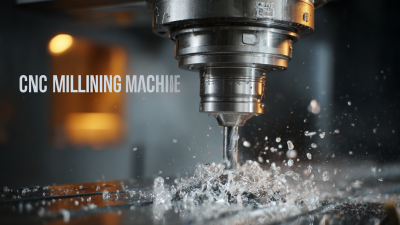
Now, milling lathes? They work the other way around. Here, you've got a cutting tool that rotates while the workpiece stays put. This technique is brilliant for carving out detailed shapes and those complex geometries that are often a must in precision engineering. Since milling can handle multiple axes, it opens up a whole world of possibilities for more intricate designs. When engineers really grasp these basic differences, it becomes so much easier to streamline their manufacturing processes. They can lean towards turning when they need simple cylindrical parts or switch to milling for those detailed, multi-dimensional pieces. Getting it right can really amp up production efficiency, cut down on errors, and ultimately lead to products that are just plain better.
CNC, or Computer Numerical Control, is such a game-changer for turning and milling lathes, especially in precision engineering. Seriously, when you integrate CNC systems, these machines can pull off some pretty complex machining tasks with amazing accuracy and consistency. It’s pretty cool how operators can just enter detailed designs straight into the machine, making the whole production process smoother and cutting down on those pesky human errors. This leads to a noticeable boost in product quality, which is why you see CNC-equipped lathes as a must-have in industries that demand top-notch precision.
But that's not all—CNC technology really ramps up what traditional lathes can do. It brings in features like automatic tool changes and multi-axis operations, which means engineers can work on a wider variety of projects and materials. This versatility is a big deal because it ramps up efficiency and productivity. Plus, with the ability to program complex machining sequences, CNC lathes can create intricate parts that are pretty much impossible to make manually. That way, businesses can adapt quickly to market needs, offering customized solutions without skimping on quality. In short, bringing CNC technology into turning and milling lathes is reshaping the landscape of precision engineering, setting fresh standards for efficiency and reliability.
When you're working on turning and milling processes with different metals, it's super important to keep in mind the unique characteristics of each material since they really impact how well the machining goes. Take aluminum, for instance— being a softer metal, it can be machined pretty quickly with faster feed rates and higher speeds. But then there’s titanium, which is a whole different ballgame; it’s much harder and needs a slower approach with specialized tooling to handle all that wear and tear. Knowing these differences is key to finding the right balance between speed and precision. In the end, you really want to boost productivity in precision engineering, right?
Quick Tip: Always make sure your cutting tool is compatible with the metal you’re working on. For those tough high-strength alloys, choosing tools made from carbide or ceramic can really amp up durability and performance, saving you from all those annoying tool changes.
Now, let’s not forget about the coolant—it plays a big part in the machining process too. Metals like stainless steel can really heat up when you’re cutting them, and using the right coolant makes a world of difference in keeping your tools in good shape and improving that surface finish. On the flip side, when you’re dealing with non-ferrous metals, you might not need such aggressive coolant solutions—something lighter could work just fine and help keep your workspace cleaner.
Another Tip: Create a cooling strategy that fits the materials you’re processing. For example, using high-pressure coolant systems can really step up chip removal, especially with tougher materials, which in turn can lead to longer tool life and better accuracy.
The advent of Industry 4.0 has profoundly transformed lathe manufacturing, leading to unprecedented improvements in efficiency and precision. With the integration of smart technologies, manufacturers are adopting data-driven strategies that enhance operational effectiveness. According to a report by McKinsey, companies that have embraced Industry 4.0 practices can achieve a productivity increase of up to 20% through automation and real-time monitoring of machinery. Specifically, the utilization of IoT-enabled lathes allows for predictive maintenance, significantly reducing downtime and prolonging the life of the equipment.
Moreover, the focus on data analytics is reshaping how lathes operate within precision engineering. A recent survey by Deloitte indicated that 79% of manufacturers are implementing advanced analytics, which enables them to optimize production processes and tailor lathes to meet specific client needs. This shift not only improves the quality of the manufactured parts but also accelerates the time-to-market, enhancing competitive advantage in a fast-paced industry. As manufacturers continue to harness the benefits of Industry 4.0, turning and milling lathes will evolve to meet the increasing demand for precision while ensuring sustainability and efficiency.
You know, the world of precision engineering is really picking up speed these days. Smart lathes are totally taking the lead when it comes to automation, especially with all the trends we’re expecting to see by 2025. It’s pretty wild to think that the Global Cnc Machine market is set to grow from around $101.22 billion to nearly $195.59 billion by 2032! Manufacturers are pouring more and more money into cutting-edge machines that boost both productivity and precision. And honestly, it makes sense—there’s a huge push for greater efficiency and accuracy out there, which is nudging engineers to embrace smart tech that weaves in real-time data and automation into their daily grind.
In the midst of all this change, we’re seeing a noticeable jump in the use of Digital Readout (DRO) systems, especially among small and medium-sized businesses (SMEs). By retrofitting their older machines with these DRO systems, these companies are making sure they don’t fall behind in a world where precision is pretty much everything. These upgrades really help with monitoring and controlling processes, which is super important for getting production workflows just right. With the machine tools market expected to keep on growing, the rise of smart lathes and automation tools really marks the beginning of an exciting new chapter for precision engineering, stretching the limits of what's possible in manufacturing.
This chart illustrates the precision levels of turning lathes and milling lathes in micro-meters (µm). Turning lathes are generally more precise compared to milling lathes, highlighting the trends in automation and precision engineering.
When it comes to precision engineering, deciding to invest in advanced lathe technologies, like turning and milling lathes, is about way more than just a preference; it's a serious financial commitment. A recent study by MarketsandMarkets projects that the global lathe machine market is going to hit around $3.5 billion by 2026, with a growth rate of 4.5% per year. This trend shows that there's a real demand for precision machining across different industries, which makes it super important to make informed investment choices.
For manufacturers, figuring out the return on investment (ROI) from these high-tech lathe tools is key. A report from the NIST found that bringing in advanced lathes can boost productivity by as much as 60% and cut production costs by an impressive 30% compared to older methods. This kind of cost efficiency, along with better accuracy, not only makes the initial investment worthwhile but also helps companies keep their edge in a fast-changing market. As businesses take a hard look at their production capabilities, the financial benefits of adopting state-of-the-art lathe solutions start to become clearer, showing just how important cost analysis is in strategic planning.
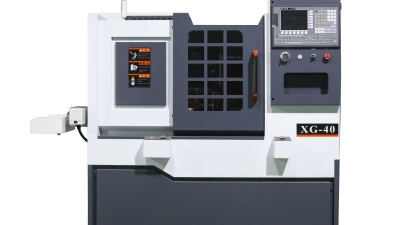
In the realm of precision machining, the small slant bed CNC lathe machine stands out as a marvel of engineering, particularly when equipped with optional milling functions. This innovative design not only maximizes efficiency but does so while ensuring a high degree of accuracy. The slant bed configuration significantly improves chip removal performance, allowing for smoother operation and extended tool life. Such features make it an invaluable asset for various industries, ranging from automotive to aviation, where precision is paramount.
The XG40 and XG46 models exemplify the advantages of slant bed CNC lathes, boasting strong rigidity and high precision. Their compact footprint is ideal for workshops with limited space, while their user-friendly interface allows for easy operation, even for those new to CNC machining. Furthermore, these machines offer a wide application range, making them suitable for a diverse set of machining tasks. With a high degree of automation, operators can achieve impressive productivity levels, reducing manual intervention and streamlining production processes. The integration of milling capabilities adds a layer of versatility, enabling users to tackle more complex projects without the need for multiple machines.
: Turning lathes focus on rotating a workpiece while a stationary cutting tool removes material, ideal for producing cylindrical components. Milling lathes use a rotating cutting tool on a stationary workpiece, excelling in creating intricate shapes and complex geometries.
CNC technology enhances lathe performance by allowing for complex machining tasks to be executed with high accuracy and repeatability. It streamlines production, reduces human error, and improves the quality of the final product.
Turning lathes are best suited for producing simple cylindrical designs and components that require high precision.
Manufacturers should choose milling lathes for detailed, multi-dimensional parts that require intricate shapes and complex geometries, as milling can operate on multiple axes.
The global lathe machine market is predicted to reach $3.5 billion by 2026, growing at a CAGR of 4.5%, reflecting increased demand for precision machining.
The integration of advanced lathes can enhance productivity by up to 60% compared to traditional methods.
Advanced lathe technologies can reduce production costs by averaging 30% and improve precision, justifying the initial investment for manufacturers.
CNC technology allows for automatic tool changes and multi-axis operations, enabling engineers to handle a wider range of projects and materials efficiently.
Cost analysis is essential for manufacturers to assess the return on investment (ROI) associated with advanced lathe technologies, helping to make informed and strategic financial commitments.
Investing in advanced lathe technologies positions companies to remain competitive by enhancing production capabilities and responding swiftly to market demands for high precision and custom solutions.